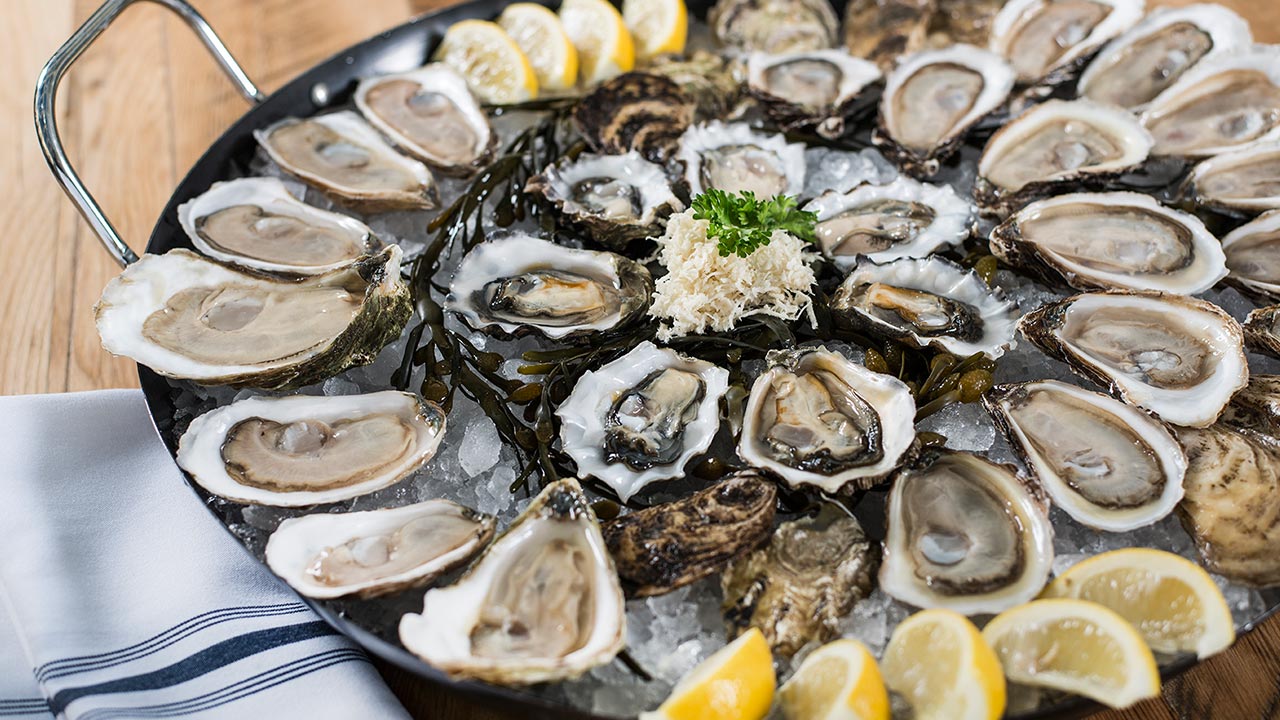
Oysters

A brief history of the mighty (tasty) bi-valve

Varieties

Oyster Varieties

In the late 1800's, there were recordings in North America of ten fossilized families of oysters. Of those however, only two remain in a fishable state: the Eastern or Atlantic Crassostrea Virginica and the Ostrea (Lurida) Conchaphila or Olympia Oyster on the west cost.

North American waters now grow six families, including the two mentioned above. The other four are imports: the Ostrea Edulis (European Flat), the Crassostrea Gigas (western Pacific), the Crassostrea Sikamea Kumamoto (western Pacific), and the Suminoe platter oyster the Crassostera Ariakensis (northern Pacific), primarily grown out for shucked meat export to Asian markets.

In North America, we are fortunate that each of the “grow out” bays and waters impart such distinctive character to the shape, size and taste of their product that there are literally hundreds, if not thousands of varieties that we can enjoy.

Harvesting History

Oyster Farmers

The longer an oyster bed has been harvested the deeper the history and richer the stories. The early harvest areas are mostly to be found in Brittany, France, and Whitstable, England. In the 17th century, Chesapeake Bay became the first producing area in North America to be followed by the tidal flats off Washington in the Pacific Northwest of the USA and the famous Malpeque Bay in Prince Edward Island.

The first dedicated harvesters were the Oystermen guilds of Britain, the Dredgermen of Colchester, and the Skipjacks of the Chesapeake. These men and their methods historically changed the way that oysters came off their growing beds. The farming of the oyster first emerged in Brittany as fishermen began to switch to management techniques. In the late 1930s, the high demand for shucked oysters from the tidal flats off the Pacific Northwest brought the shift from gathering to cultivating.

It wasn't long before there were technical improvements and a move off the tidal areas to harvest the deeper oyster-bearing waters. Tiles to collect, poles to hang and systems to suspend the young oyster are some of the various techniques used today in farming oysters around the world. The Northeast of North America is the last spot where one can still find the traditional gatherer, but even there, farming is gaining ground.

Marketing History

oyster shipment containerSome of the great oyster houses of the world sit next to the bay that produces their fare. Morins on the Weir in Galway Ireland has been a great example for 200 years. Others sit at the end of major travel routes such as the little houses that offer oysters near the rail stations in Paris. Still others (like ourselves) have developed to serve large urban centres.

At Rodney's, after more than twenty years in Toronto, we like to think of ourselves as Canada's representative amongst the great oyster houses of the world. Perhaps compared to Wilton's with its 200 plus years in London, Swan's with its century plus in San Francisco, and Morin's, that might be a tad presumptuous. We all, however, share the same dedication to the oyster and its community.

In the early years, oysters were sold only in months with an "R" (the heat of summer caused rapid spoilage, keeping oysters off the menu). New systems of transportation, refrigeration, containers and storage have changed all that. Today, you can be sure of finding a succulent treasure at all times and in recipes of every manner from the traditional soup to the exotic oyster-stuffed royal brisket.

Suggested Reading

We don't have the space here to relate all of the oyster's great history, but if you wish to "tong a little further", here are a few suggestions that offer up the whole story, as it began with the starfish: the oyster catcher, and man—all going after the oyster.

Oyster Books

These books are full of fascinating oyster lore. Some may find them a deep puddle to wade through, but they'll get you oyster-wet, and in the process you'll learn what inspires us and those with whom we work.

A word of caution: if you're drawing info from oyster-focused cookbooks, check the origin and details of the recipe. You won't want to use a European Oyster in a Northeast American dish. The differences can be dramatic!

Back to Our Seafood page